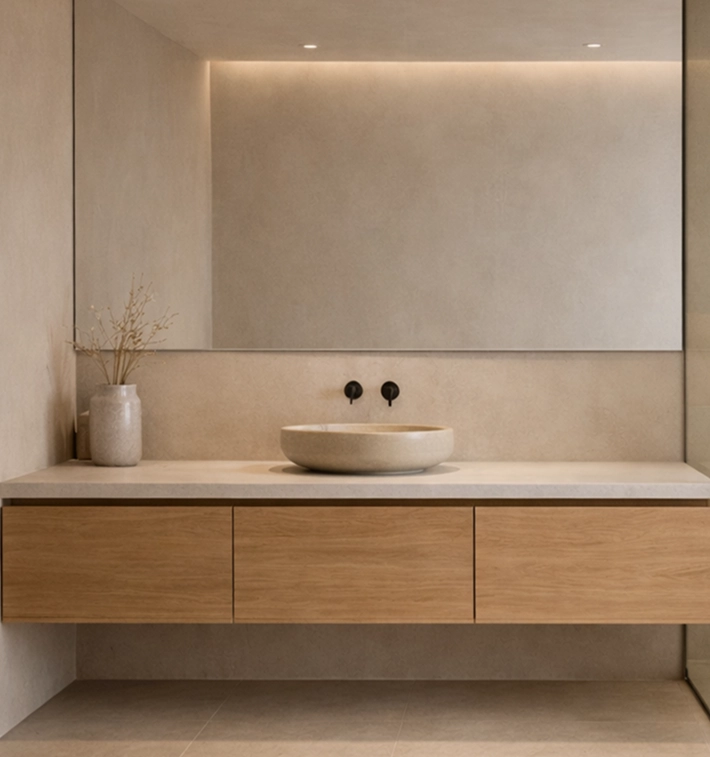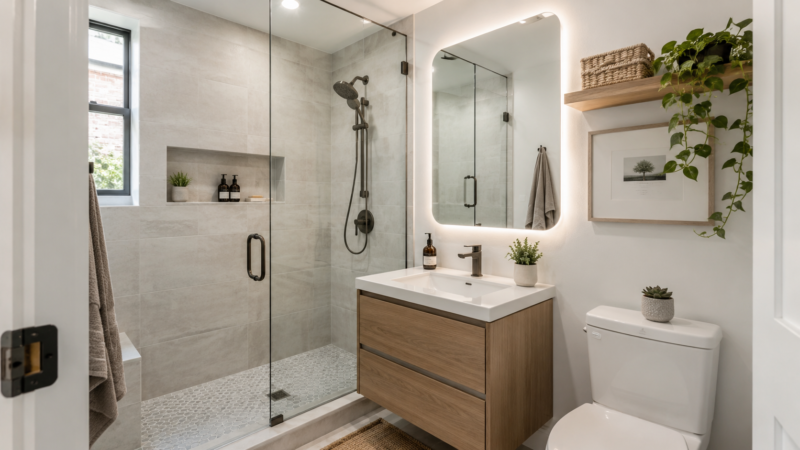


Whether you are updating an old bathroom or planning a full renovation, the right remodeling choices can make a small space feel bigger and work better for everyday life. Here are seven practical ideas to consider before starting your bathroom remodel.
1. Choose a Layout That Makes Daily Use Easier
Before choosing tile, fixtures, or colors, start with the layout. In a small bathroom, every inch matters. The position of the toilet, vanity, shower, bathtub, and door can affect how comfortable the room feels.
A good bathroom layout should make it easy to move around, open drawers, step into the shower, and use the sink without the space feeling crowded. In some projects, even small changes — such as replacing a large vanity with a smaller one or switching from a tub to a walk-in shower — can make the bathroom much easier to use.
2. Consider a Walk-In Shower
A walk-in shower is one of the most popular upgrades for small bathrooms. It can make the room feel more open, especially when paired with glass shower doors and simple tile.
Walk-in showers are also practical because they are easy to access and easier to clean than many older tub-and-shower combinations. For apartments, condos, co-ops, and townhouses, proper waterproofing is very important, so this type of work should be planned carefully.
3. Use Tile to Make the Space Feel Larger
Tile can completely change the look and feel of a bathroom. In smaller spaces, large-format tile can help reduce visual clutter because there are fewer grout lines. Light-colored tile can also make the room feel brighter and more open.
For shower walls, floor tile, niches, and bathroom backsplashes, it is important to choose materials that are durable and easy to maintain. The tile layout should also be planned before installation so the final result looks clean and balanced.
4. Add Better Lighting
Lighting has a big impact on how a bathroom feels. A small bathroom with poor lighting can feel dark and tight, while good lighting can make the space feel cleaner, brighter, and more comfortable.
A strong bathroom lighting plan may include overhead lighting, vanity lighting, mirror lighting, or recessed lights. If possible, lighting should be placed where it helps with daily tasks such as shaving, makeup, and getting ready in the morning.
5. Improve Storage Without Making the Room Feel Crowded
Storage is one of the biggest challenges in a small bathroom. The goal is to add useful storage without making the space feel smaller.
A vanity with drawers, a recessed medicine cabinet, shower niches, wall shelves, or built-in storage can help keep everyday items organized. The best storage choices depend on how the bathroom is used and how much space is available.
6. Update Ventilation
Good ventilation is important in every bathroom, especially in smaller bathrooms where moisture can build up quickly. A properly installed exhaust fan helps reduce humidity and can help protect tile, paint, grout, and fixtures over time.
During a bathroom remodel, it is a good idea to review the existing ventilation and decide whether it needs to be updated. This is especially important in older homes and apartment buildings.
7. Choose Fixtures That Fit the Space
Small bathrooms work best with fixtures that match the size of the room. A vanity that is too large, a bulky toilet, or oversized fixtures can make the bathroom feel cramped.
Compact vanities, wall-mounted storage, simple faucets, clean shower hardware, and properly sized mirrors can help the room feel more organized. The goal is not only to make the bathroom look better, but also to make it easier to use every day.
Final Thoughts
A small bathroom remodel does not have to feel limited. With the right layout, tile, lighting, ventilation, storage, and fixtures, even a compact bathroom can become more comfortable and practical.
If you are planning a bathroom remodel in New York City or New Jersey, Bloomarquee can help with planning, material selection, demolition, plumbing, electrical work, tile installation, fixtures, and final finishing.
Ready to Remodel Your Bathroom?
Tell us about your project and get a free, no-obligation estimate within 24–48 hours.
Request a Consultation